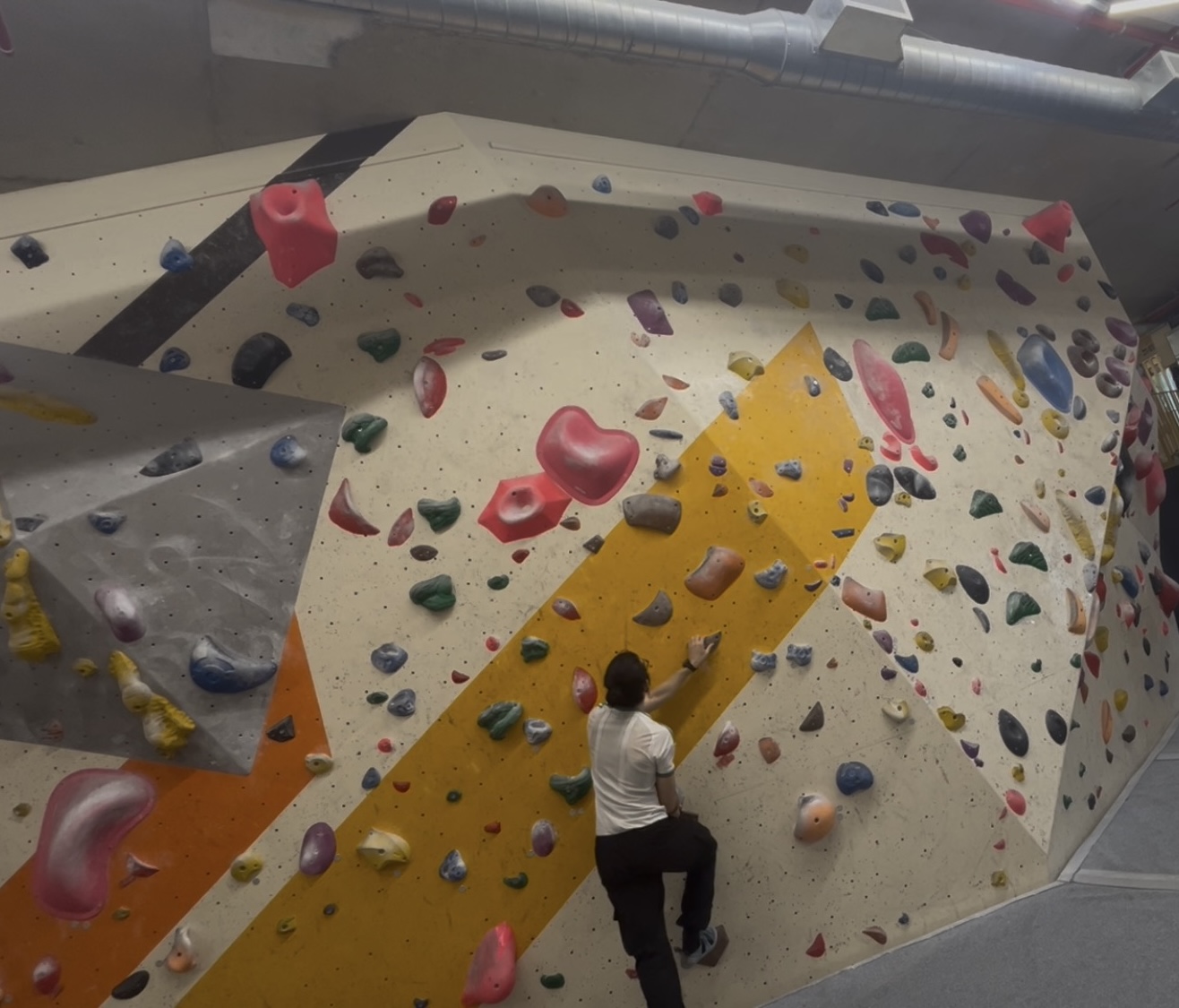
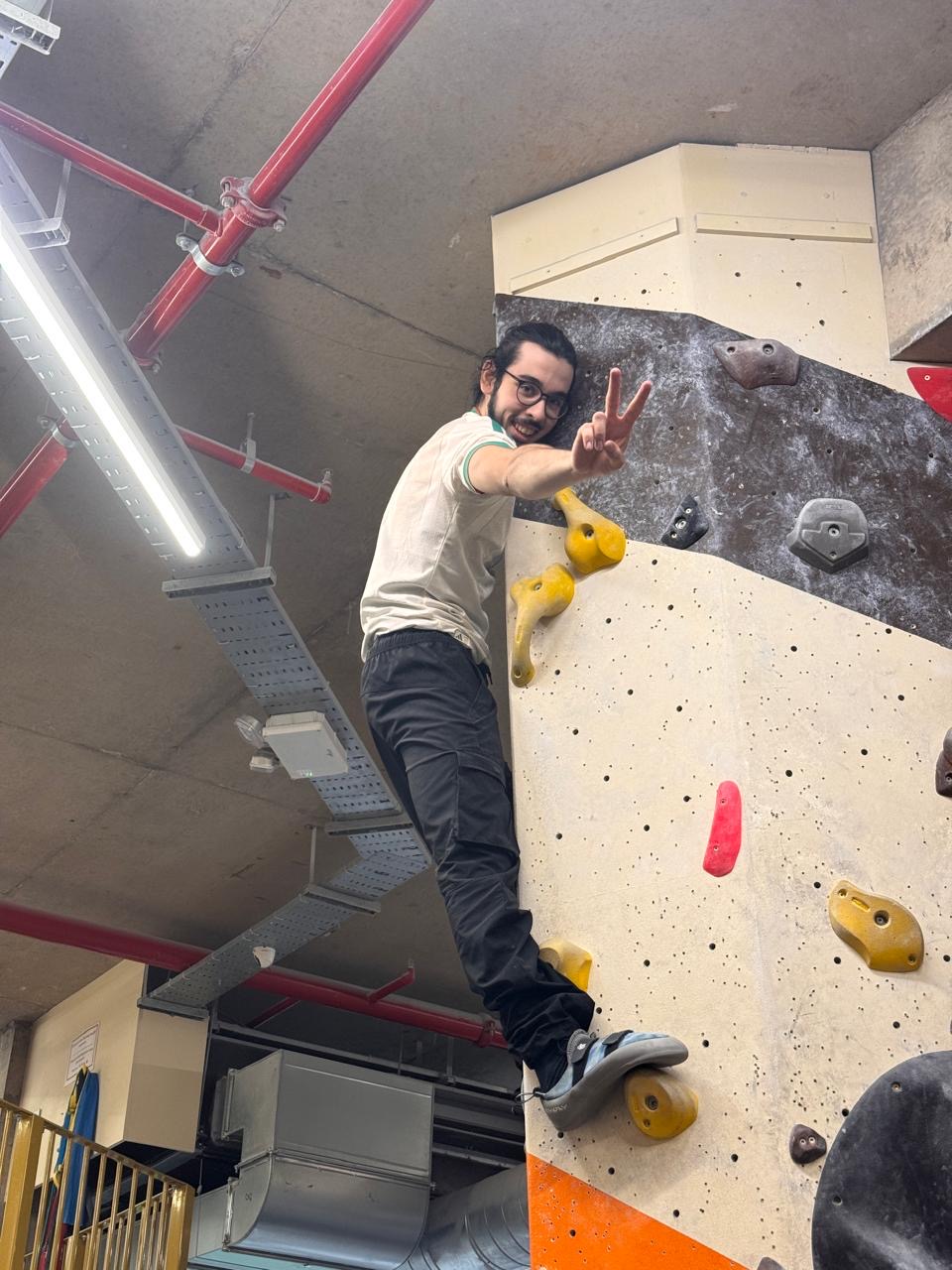
きょうはわたしとともだちはクライミングをします。ぼくはクライミングがほんとに大好きです、でも、たかいです、そして時々行きます。ともだちはオマルとオウアイスとタリクです。じぶんとおなじなまえのひとがいるグループにいるのは、ふつうのことだとおもいます。まだまだたかいところがこわいです、がんばってね!クライミングのマンガのMCはソロがすきです、わたしも、でもときどきいしょにするのもたのしいです。じゃみなさん、きょうのノートをたのしんでもらえたらうれしいです。
じぶん = myself;
と = with;
おなじ = same;
なまえ = name;
の = links words (like "'s" or "of");
ひと = person;
が = marks who or what is doing the action;
いる = there is (for people/living things);
ぐるーぷ = group;
に = in;
いる = to be;
の = turns "being in..." into a noun ("the being in...");
は = marks the topic;
ふつう = normal;
こと = thing;
だ = is;
と = "that" (quotes a thought);
おもいます = I think;
たかい = high;
ところ = place;
が = marks what causes the feeling;
こわい = scary / frightening;
です = polite "is";
いっしょ = together;
に = turns "together" into "in a together way" (like "-ly");
する = to do;
の = turns "doing" into a noun ("the doing");
も = also / too (replaces は or が);
たのしい = fun / enjoyable;
です = polite "is";
きょう = today;
の = 's (links "today" to "note");
を = marks the thing being read;
たのしんで = enjoying (from たのしむ, "to enjoy");
よんで = reading (from よむ, "to read");
もらえたら = if I could receive (the favor of)...;
うれしい = happy, glad;
です = polite "is";
時々 (ときどき, tokidoki) = "sometimes". 々 isn't a kanji. It just repeats the kanji before it, so 時々 means 時時, read toki + doki. The か becomes が-type voiced sound (とき → どき), which is common when a word repeats.